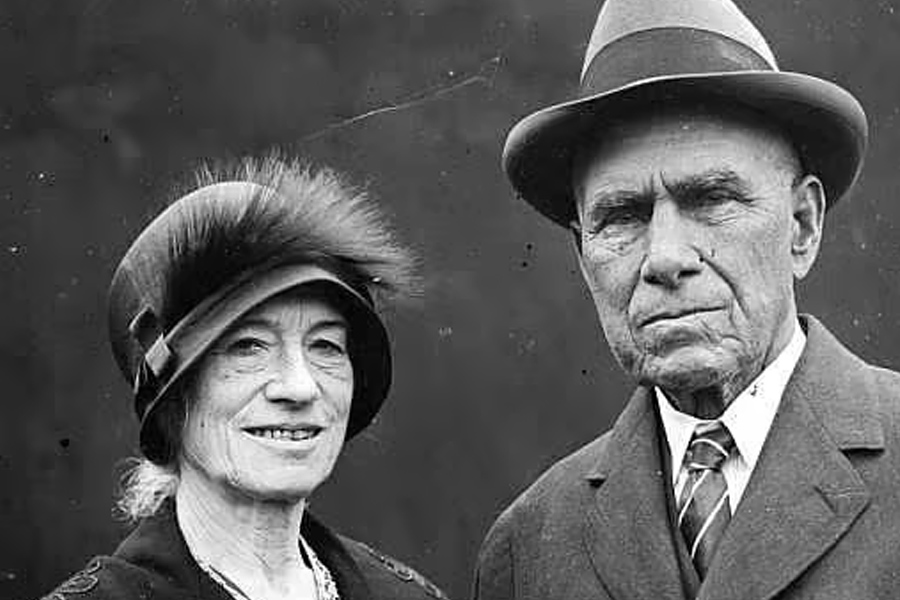
Basic Information
| Field | Details |
|---|---|
| Full name | Frank E Butler |
| Born | 30 January 1847, County Longford, Ireland |
| Died | 21 November 1926, Ferndale, Michigan, United States |
| Nationality | Irish-born American |
| Known for | Sharpshooting, vaudeville, circus performance, Wild West entertainment, management work |
| Spouse | Annie Oakley |
| First spouse | Henrietta Saunders |
| Children | Edward Francis Butler, Katherine E Butler |
| Parents | Michael Butler, Catherine Whelan |
A Life Built on Skill, Timing, and Stagecraft
As I see it, Frank E. Butler lived when talent met theater. He was more than a shot. He was a performer, negotiator, promoter, and backer of one of America’s most famous acts. His name is eternally linked to Annie Oakley, yet it can obscure the truth. He lived before Oakley, had a family before fame, and had a multi-act career.
From County Longford, Ireland, Frank moved to the US as a child. Migration, adaption, work, and survival are important family stories. He was the oldest of five children, which matters because eldests grow up early. They learn duty before luxury. Butler’s life exhibits discipline, endurance, and practicality for opportunity.
He worked conventional jobs in America before becoming an entertainer. He worked hard, tried numerous jobs, and became a good shot. Despite its simplicity, “sharp shooter” conveyed exactness, nerves, and repetition to him. A missed shot can deflate an act like a dropped note. Butler built his career on accuracy, which is poetry in high-stakes situations.
The Family He Came From and the Family He Built
Frank E Butler was the son of Michael Butler and Catherine Whelan. They were the foundation of his earliest life, though the public record preserves them more as names than as detailed portraits. Still, their role is important. They brought him from Ireland into a new country and a new future. That kind of move reshapes a family. It changes language, work, expectations, and identity. Frank’s later career reflects that kind of reset. He became an American performer, but the Irish beginning remained part of his story.
He was also the eldest of five children. That places him in the role of the first branch on a family tree. The name of only one sibling appears clearly in the accessible material: William J. Butler. The others are less consistently documented, which often happens in older family histories. Some names survive in records, some in letters, some in memory, and some slip away like stage smoke.
Frank’s personal life included two marriages. His first wife was Henrietta Saunders, and together they had two children: Edward Francis Butler and Katherine E Butler, often called Katie. These children represent a quieter side of Butler’s life, a domestic chapter that is easy to overlook when the spotlight keeps swinging toward Annie Oakley. Edward Francis Butler was born in 1869 and died in 1911. Katherine E Butler was born in 1872 and lived until 1955. Their lives stretched beyond the fame of their father and into a different rhythm of history.
His second and best-known spouse was Annie Oakley, born Phoebe Ann Moses. Their marriage became both a personal bond and a professional engine. She beat him in a shooting contest in Cincinnati, and that moment changed everything. He did not remain merely the man who lost a match. He became her partner, then her husband, then a crucial part of the machinery that carried her fame. Their marriage began on 23 August 1876, and it lasted for roughly 50 years. That is a long duet. It is the kind of partnership that can only survive when both people understand the rhythm of the other.
Frank and Annie did not have children together, but they built a household that was shaped by movement, work, and travel. In later years they lived in places such as Cambridge, Maryland, and Pinehurst, North Carolina. After Annie died, Frank stayed briefly in Ferndale, Michigan, where he died shortly afterward. That final detail gives his life a faded curtain call, quiet rather than loud.
Career, Public Persona, and Professional Strength
Despite starting in performance, Frank E. Butler’s career was multifaceted. Circuses and variety shows employed him as a shooter. Animal and practical labor were among his previous jobs before and around that time. His glamour was not innate. He worked toward that.
After his customary companion was unavailable, he performed with Annie Oakley in 1882, changing his career. This became a legendary Wild West entertainment turning point. His and Annie’s squad became a narrative people wanted to watch again. The chemistry was clear. He was steady, and she was talented. They resembled paired blades.
They joined Buffalo Bill’s Wild West show in 1885 after performing with the Sells Brothers Circus in 1884. Their audience was national and worldwide during that time. Frank did more than perform in the collaboration. Management, press agent, and business support were his roles. He shaped publicity, defended the act against competitors, and framed Annie Oakley as a star. That role counted. Applause is apparent in show business, but structure keeps it coming.
Frank later worked for Remington Arms and Union Metallic Cartridge Company. These positions demonstrate his renowned expertise offstage. He was more than a novelty. He had practical knowledge, which may outlast celebrity.
Work Achievements and Lasting Reputation
Frank E Butler’s achievements are tied to performance, management, and partnership. He helped create and sustain one of the best-known shooting acts of the late 19th and early 20th centuries. He also played a role in building Annie Oakley’s public image. That kind of work can vanish behind a famous name, but it should not.
His achievement was not a single trophy. It was endurance. It was the ability to adapt from performer to partner to promoter. It was the discipline to keep an act alive across years, audiences, and changing tastes. He moved through the entertainment world like a man walking a tightrope with perfect balance. That balance is not flashy, but it is rare.
There is no reliable net worth figure that captures his financial life in a neat number. What survives instead is the shape of his work. He earned through performance, business roles, and commercial representation. That is often how lives like his should be measured, not by a single pile of money, but by the range of ways they stayed useful.
FAQ
Who was Frank E Butler?
Frank E Butler was an Irish-born sharpshooter and entertainer best known as the husband and professional partner of Annie Oakley. He became a major figure in Wild West and circus performance and later worked in business roles connected to firearms and publicity.
Who were Frank E Butler family members?
His parents were Michael Butler and Catherine Whelan. He was the eldest of five children, and one documented sibling was William J. Butler. He had two children from his first marriage, Edward Francis Butler and Katherine E Butler. His best-known spouse was Annie Oakley.
Was Annie Oakley Frank E Butler spouse?
Yes. Annie Oakley was his second wife and lifelong partner. They married on 23 August 1876 and stayed together for about 50 years.
Did Frank E Butler have children?
Yes. He had two known children with his first wife Henrietta Saunders: Edward Francis Butler and Katherine E Butler. He did not have children with Annie Oakley.
What was Frank E Butler known for professionally?
He was known for sharpshooting, stage performance, circus and Wild West entertainment, and later for work as a manager, press agent, and firearms company representative. He helped shape Annie Oakley’s public success.
Where was Frank E Butler born?
He was born in County Longford, Ireland, and later moved with his family to the United States as a child.
When did Frank E Butler die?
He died on 21 November 1926 in Ferndale, Michigan, only weeks after Annie Oakley’s death.
Why is Frank E Butler remembered today?
He is remembered because he stood at the center of a remarkable partnership that blended marriage, performance, business, and American show culture. His life helped define the era in which sharpshooting became stage art.