Basic information
| Field | Details |
|---|---|
| Full name | Paulina Marie Pinsky |
| Born | November 11, 1992 |
| Birthplace | Los Angeles, California |
| Known for | Writing, teaching, coaching, podcasting, publishing, sobriety writing, performance |
| Education | Barnard College, Columbia University MFA |
| Family | Daughter of Drew Pinsky and Susan Pinsky, triplet sibling of Jordan Davidson Pinsky and Douglas Drew Pinsky |
| Public identity | Writer, educator, coach, former competitive figure skater, performer |
| Notable work | Co-author of It Doesn’t Have To Be Awkward |
| Recent creative focus | Substack essays, writing coaching, recovery writing, skating, clowning |
A life shaped by performance, pressure, and reinvention
Her story is dynamic, making Paulina Marie Pinsky stand out. It moves. Sharp and dazzling like a skater on fresh ice, it moves into writing, teaching, recuperation, and public reflection. From birth in Los Angeles on November 11, 1992, she was part of a prominent family. Dr. Drew and Susan Pinsky are her parents. Due to her triplet status, her family tale is multifaceted. She lived with her brothers, Jordan Davidson Pinsky and Douglas Drew Pinsky, amid the shadow and limelight of a public family.
That background can feel like a constant spotlight. It appears to be material for Paulina, not just pressure. She articulated her life. Personal suffering became public writing. That choice counts. Her identity goes beyond inheritance. Built.
Family ties that shape the public story
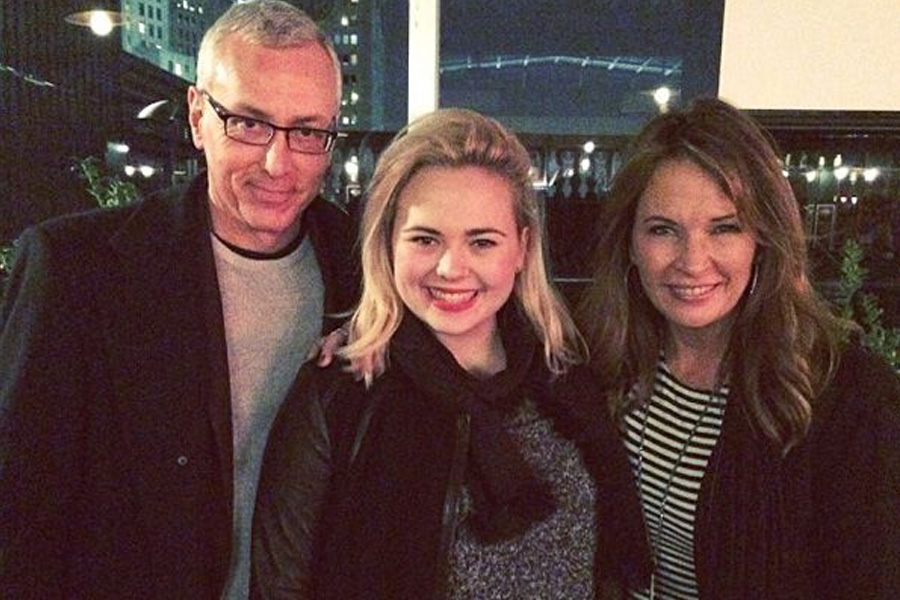
Paulina’s family is central to understanding her. Her father, Drew Pinsky, is widely recognized as a physician and media personality. Her mother, Susan Pinsky, has also been part of the public story through family and media appearances. Her brothers, Jordan and Douglas, are her triplet siblings, and that detail matters because triplets often carry a kind of twin-lens closeness, only multiplied. The bond is usually intense, immediate, and lifelong.
On her father’s side, her grandfather was Morton Pinsky, and her grandmother was Helene Stanton. Her aunt is Dana Chelf, who was born Dana Pinsky. These family links place Paulina inside a wider lineage that includes medicine, performance, and public attention. Her grandfather Morton’s obituary identified the family structure clearly, and Helene Stanton was herself known publicly as an actress and singer. So Paulina comes from a line where visibility is not accidental. It is part of the family atmosphere.
What I find especially interesting is how Paulina’s public writing often feels personal without feeling flimsy. She does not present family as decoration. She presents it as weather. It is there in the air. It shapes the temperature of everything else.
Education and early creative formation
Paulina studied American Studies at Barnard College, with a concentration in Media and Popular Culture, and later earned an MFA in Nonfiction Creative Writing from Columbia University. That combination makes sense for someone whose work sits at the intersection of observation and confession. She is not just telling stories. She is studying how stories move through culture, then using that knowledge to shape her own voice.
She also taught comedy writing to high school students, which says a lot about her range. Comedy writing requires timing, instinct, and a sense of what makes people lean in. Teaching it requires patience, structure, and trust. Those are not small skills. They suggest that Paulina is not only a writer of private essays. She is also a teacher of craft, a person who helps others find a voice instead of only building one for herself.
The arc of her education feels like a bridge between theory and lived experience. Barnard gave her a lens. Columbia sharpened it. Her later work seems to use both tools at once.
Writing career and public voice
Paulina’s career is built around writing, but not in a narrow way. She has worked as a writer, writing coach, educator, podcaster, performer, and author. That range gives her a layered public identity. She is not trapped in one genre. She moves from essays to teaching to publishing to public conversation.
One of her best known projects is It Doesn’t Have To Be Awkward: Dealing With Relationships, Consent, and Other Hard-to-Talk-About-Stuff, co-authored with her father. The title itself feels like a door being pushed open. It tells readers that hard conversations do not have to remain locked rooms. The subject matter is practical and social, but also deeply human. Consent, relationships, and communication are not abstract issues. They are daily life. The book gave her a platform that connected family, youth education, and public conversation in one place.
She also writes extensively in essay form, often focusing on sobriety, identity, movement, and change. Her newsletters, including newly sober and process/product, show a writer who is interested in process as much as outcome. That matters. Many people only want the polished result. Paulina seems interested in the messy middle, the draft beneath the draft, the emotional scaffolding that holds the final text upright.
Her work has a specific kind of energy. It is direct but not flat, intimate but not fragile. I read that as a writer who understands that the self is not a polished marble statue. It is more like wet clay, still being shaped by each season.
Recovery, identity, and personal change
A large part of Paulina’s public narrative centers on recovery. She has spoken openly about eating disorders and later sobriety, and her writing repeatedly returns to themes of control, release, health, and self-understanding. That honesty gives her work force. It also gives it texture.
Recovery writing can become overly neat in the wrong hands. Hers does not seem to do that. Instead, it reflects the uneven reality of healing. One day can feel like progress. Another can feel like standing in the same place. That is part of what makes her voice believable. She writes from inside the motion, not from outside it.
She also has a public connection to skating, including figure skating from her earlier years and later reflections on returning to the ice. Skating is a useful metaphor for her life because it blends discipline and risk. You need control, but only so much. Too much rigidity and you fall. Too little and you drift. Her story feels similar. She keeps rebalancing.
In more recent public notes, she has also mentioned clowning, which adds another layer. Clowning is about vulnerability, timing, and the willingness to fail in public. That may sound playful, but it is a serious art. For someone already writing about reinvention, it fits.
Recent public presence
Paulina writes publicly and online. In articles, social media, podcasts, and newsletters, she has been active. Engagement, mobility, recuperation, skating, Minnesota, and creativity are her topics. Although details vary, the through line remains. She is creating a public self through frequent articulation.
It’s not loud for its own sake. This adds up. The mosaic grows with each post, essay, and appearance. Over time, the pattern emerges. Paulina makes a living by observing her life and writing about it.
Why her family matters in the larger story
I think the family context matters because it helps explain the friction and the fuel behind her writing. Drew Pinsky gives the family a high-profile public dimension. Susan Pinsky anchors the household side of the story. Jordan and Douglas are part of the triplet dynamic that likely shaped her sense of self from the start. Morton Pinsky and Helene Stanton place the family in a broader multigenerational line. Dana Chelf extends that web outward.
But Paulina does not seem content to exist only as someone’s daughter or someone’s sister. She uses the family context as a starting point, then steps outward. That is the real story here. She has taken a life that could have remained defined by surname and turned it into a body of work. That is no small feat. It is closer to carving a path through ice than strolling down a hallway. Every edge matters. Every turn counts.
FAQ
Who is Paulina Marie Pinsky?
Paulina Marie Pinsky is a writer, educator, coach, performer, and author born on November 11, 1992, in Los Angeles. She is also known as the daughter of Drew Pinsky and Susan Pinsky and the triplet sibling of Jordan Davidson Pinsky and Douglas Drew Pinsky.
What is Paulina Marie Pinsky known for?
She is known for writing essays, teaching, coaching writers, co-authoring It Doesn’t Have To Be Awkward, and speaking publicly about recovery, relationships, identity, and sobriety. Her work often blends personal experience with practical insight.
Who are Paulina Marie Pinsky’s immediate family members?
Her immediate family includes her father Drew Pinsky, her mother Susan Pinsky, and her brothers Jordan Davidson Pinsky and Douglas Drew Pinsky. She is one of triplets, which is a defining part of her family identity.
Who are Paulina Marie Pinsky’s grandparents and aunt?
Her paternal grandfather was Morton Pinsky, and her paternal grandmother was Helene Stanton. Her aunt is Dana Chelf, born Dana Pinsky.
What did Paulina Marie Pinsky study?
She studied American Studies at Barnard College, focusing on Media and Popular Culture, and later earned an MFA in Nonfiction Creative Writing from Columbia University.
What kinds of topics does Paulina Marie Pinsky write about?
She writes about sobriety, eating disorder recovery, relationships, consent, creativity, movement, identity, and the challenges of becoming oneself in public.
Is Paulina Marie Pinsky active online?
Yes. She maintains a public writing presence through newsletters, essays, podcast appearances, and social media, where she continues to share personal and creative updates.