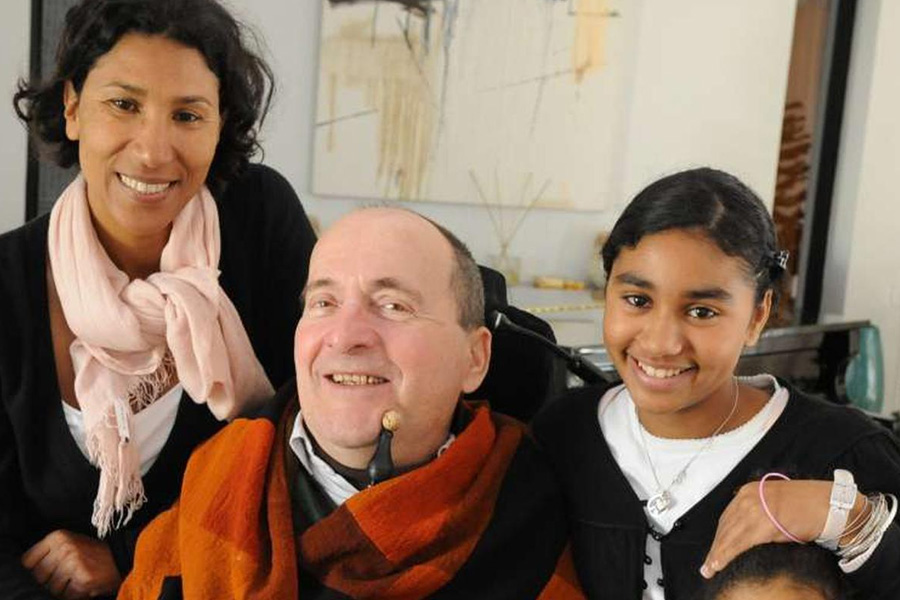
Public awareness of Khadija Pozzo Di Borgo is unusual. While her name stands with one of the most famous personal tales in modern French culture, she remains a highly private character. A family-centered existence formed by love, perseverance, relocation, and grief stands out in the public image, not stardom.
She is best known as Philippe Pozzo di Borgo’s second wife, whose life inspired Intouchables. Khadija Najimi, her maiden name, is described as Moroccan in public sources. Her identity is defined by the few details repeated throughout the record. Beyond that, most of what can be said with confidence belongs to family relationships, shared dwellings, and glimpses of a public story.
Who Is Khadija Pozzo Di Borgo?
Khadija Pozzo Di Borgo is initially known by family. The widow of Philippe Pozzo di Borgo, she has two daughters, Sabah and Wijdane. Philippe’s first married children, Laetitia and Robert-Jean, became her stepchildren.
Her narrative intrigues me because it defies public biography. A polished professional trajectory, public image, and self-promotional appearances are absent. Her silhouette is like light through a half-open door, revealing the place but not turning it into a stage.
After marrying Philippe in 2004, her public life is anchored in Morocco and their household. Philippe married later in life, after his 1993 quadriplegic accident and the first wave of sadness and change in his family.
A Marriage That Began in 2004
Khadija’s public chronology centers on 2004. She married Philippe Pozzo di Borgo. Philippe was already known for his toughness and adaptability. After his 1993 paragliding accident, his first wife, Béatrice Roche, was from his past.
Khadija became a hub in this story. Marriage often transforms a life’s architecture, and in this case, its geography. Public depictions situate the pair in Morocco, specifically Essaouira, where Philippe lived his later years.
When I picture that move, I do not imagine a retreat from life. I imagine a different rhythm. Essaouira, with its Atlantic light and old walls, becomes in the public record more than a backdrop. It feels like the setting of a second act, where noise recedes and family life takes the lead.
Life in Morocco and the Home in Essaouira
One of the clearest recurring details about Khadija is her connection to Morocco. She is described as Moroccan, and she appears in accounts and images linked to the couple’s home in Essaouira. This matters because place often tells us what biography leaves unsaid.
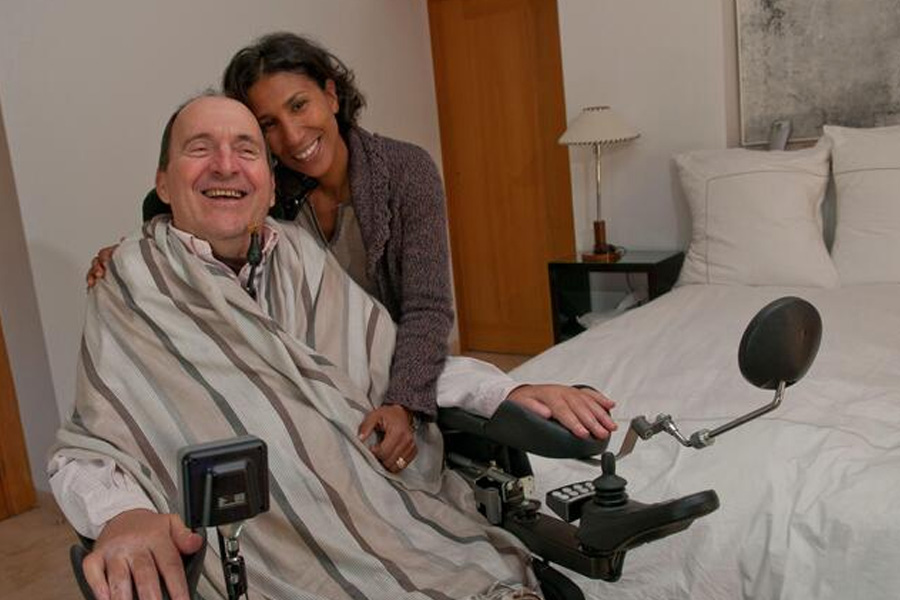
A house is more than a location. At this point, private allegiance becomes routine. That technique appears to have been prevalent in Morocco for Khadija. In 2011, she was seen with Philippe at their Essaouira house, suggesting a real life together.
Timing matters. In 2011, the narrative that would reach millions through Intouchables spread globally. Khadija appears homey and grounded. It’s not like she’s seeking attention. Instead, she joins Philippe’s inner framework in his final years.
The Family Around Her
Family is the clearest way to understand Khadija Pozzo Di Borgo. The publicly documented relationships form a small but meaningful map.
| Family Member | Relationship to Khadija | Notes |
|---|---|---|
| Philippe Pozzo di Borgo | Husband | Married in 2004, died in 2023 |
| Sabah Pozzo di Borgo | Daughter | Publicly named among their children |
| Wijdane Pozzo di Borgo | Daughter | Publicly named among their children |
| Laetitia Pozzo di Borgo | Stepdaughter | Philippe’s daughter from first marriage |
| Robert-Jean Pozzo di Borgo | Stepson | Philippe’s son from first marriage |
| Béatrice Roche | Husband’s first wife | Mother of Laetitia and Robert-Jean |
This family structure represents more than names and demands attention. It depicts Philippe’s mixed family throughout his life. Khadija is maternal and connecting. She has daughters she raised with Philippe and stepchildren from before her marriage.
There is also a restraint in the public record that is worth respecting. It does not reliably identify her own parents or siblings. So the visible family map begins not with ancestry, but with the household she formed through marriage and motherhood.
Philippe Pozzo di Borgo and the Shared Public Story
Philippe Pozzo di Borgo’s life tale brought his family into the spotlight, therefore any Khadija piece mentions him. French businessman and author Philippe, born in 1951, inspired one of the most famous French films of the 21st century after his 1993 accident.
This association caused a bizarre reflected visibility for everyone around him. No documented career made Khadija famous. A narrative that resonated beyond France shaped her public identity.
I do not think that makes her less interesting. In fact, it makes the story more textured. Public life often works like a bright lamp that illuminates one face while leaving others in shadow. Khadija is one of those figures who remains partly in shadow, yet whose presence still shapes the scene.
Children: Sabah and Wijdane
The strongest publicly repeated names among Khadija’s children are Sabah and Wijdane. They are identified as daughters of Khadija and Philippe and appear in family notices connected to Philippe’s death in 2023.
There is something important in the consistency of those two names. In a public record that is otherwise thin on personal detail, Sabah and Wijdane stand out as stable reference points. They anchor Khadija’s biography in motherhood.
Because so little else is documented in a detailed way, these relationships become even more significant. They show that her story is not merely that of a spouse attached to a famous narrative, but that of a mother within a clearly identified household.
Some retellings elsewhere have mentioned the possibility of an additional adopted child, but that detail does not stand on equally firm public ground. For a careful portrait, Sabah and Wijdane remain the two names most clearly tied to her family identity.
Stepmother to Laetitia and Robert-Jean
Blended families often carry quiet complexity, and Khadija’s family structure reflects that. Philippe had two children from his first marriage to Béatrice Roche: Laetitia and Robert-Jean. Through her marriage to Philippe, Khadija became their stepmother.
This relationship matters because it places her inside a broader family lineage rather than a narrow domestic role. She was part of a household that had both continuity and change, memory and renewal. The past was not erased. It sat at the same table as the present.
This may be difficult for families. It takes subtlety, patience, and emotional equilibrium. Although I cannot claim undocumented specifics, the structure tells a narrative. Khadija’s relationship with Philippe was not blank. It was inscribed into family history and assisted in its continuation.
Public Appearances and a Reserved Presence
Although Khadija does not appear to have a separate public job profile, she appeared in various Philippe-related public events. Her 2012 Berlin appearance with Philippe and Abdel Sellou at the German Paralympics Media Award was significant.
This kind of appearance is revealing. It suggests a supportive public role without transforming her into a media personality. She appears not as a performer of public identity, but as a companion in significant moments. There is a difference.
These glances put her in symbolic contexts between 2011 and 2012. First, Essaouira house. The Berlin public event followed. One was momentarily visible private space. Public space was entered cautiously. Together, they draw a lady at the intersection of home and public narrative.
No Verified Public Career or Net Worth
One of the clearest things I can say about Khadija Pozzo Di Borgo is also one of the simplest: there is no dependable public record of a distinct career biography or verified net worth attached to her name.
That absence must be stated. Thus, many internet profile-writing habits do not apply here. Presenting her as a corporate figure, performer, entrepreneur, or independently recorded public professional is unfounded. She also has no trustworthy financial number.
In an age that tries to turn every life into a marketable dossier, I find this absence almost refreshing. It leaves space for something older and less measurable: the record of a family life that mattered, even without being packaged.
A Timeline of Key Dates
Here is the clearest public timeline I can draw from the available material:
| Year | Event |
|---|---|
| 1993 | Philippe Pozzo di Borgo suffers the paragliding accident that leaves him quadriplegic |
| 2004 | Khadija Najimi marries Philippe Pozzo di Borgo |
| 2004 onward | The couple lives mainly in Morocco, especially around Essaouira |
| 2011 | Khadija is publicly seen with Philippe at their home in Essaouira |
| 2012 | She appears with Philippe and Abdel Sellou at a major media award event in Berlin |
| 2023 | Philippe dies in Marrakesh and Khadija is publicly named as his widow |
| 2024 to 2026 | Her name continues to surface mainly in memorial references and reposted mentions |
Dates do not tell the whole story, but they help fix its frame. In Khadija’s case, the timeline is short, clear, and centered on family milestones rather than professional ones.
Widowhood After Philippe’s Death in 2023
The most important recent event connected to Khadija is Philippe’s death in June 2023 in Marrakesh. Public death notices identify her as his widow and again place her within the immediate family circle that includes their daughters.
Widowhood changes the texture of a public identity. During Philippe’s life, Khadija appeared in public mainly beside him. After 2023, references to her naturally shifted toward remembrance, family continuity, and the preservation of a shared history.
I value transformation. It transforms her into a story’s memory keeper. Though scarce, the public record matters. Many families do not archive memory in institutions. It’s part of their daily existence.
Why Her Story Still Draws Interest
Because her life touched millions, Khadija Pozzo Di Borgo is still sought. Curiosity typically yields the same result. Not a typical public figure with an open biography. She is intimate and linked to love, adaption, and family legacy.
That, in its own way, is why the interest persists. Some lives are loud like brass. Others are steady like stone. Khadija’s public image belongs to the second kind.
FAQ
Who is Khadija Pozzo Di Borgo?
Khadija Pozzo Di Borgo is a Moroccan private figure best known as the second wife and later widow of Philippe Pozzo di Borgo. She is also publicly identified as the mother of Sabah and Wijdane.
What was her maiden name?
Her maiden name is publicly identified as Khadija Najimi.
When did Khadija marry Philippe Pozzo di Borgo?
She married Philippe Pozzo di Borgo in 2004.
Where did Khadija and Philippe live?
They are publicly associated mainly with Morocco, especially Essaouira, where they appear to have spent much of their later family life.
Who are Khadija Pozzo Di Borgo’s children?
The two children most consistently identified in the public record are Sabah Pozzo di Borgo and Wijdane Pozzo di Borgo.
Who are her stepchildren?
Her stepchildren are Laetitia Pozzo di Borgo and Robert-Jean Pozzo di Borgo, Philippe’s children from his first marriage.
Did Khadija Pozzo Di Borgo have a public career?
There is no dependable public record of a distinct career profile for her. Public references focus far more on her family life and appearances alongside Philippe.
Is there a verified net worth for Khadija Pozzo Di Borgo?
No verified public net worth is available for her. Any estimate would be speculative.
Why is her name connected to Intouchables?
Her name is connected to Intouchables because she was the wife of Philippe Pozzo di Borgo, whose life story helped inspire the film.
What happened in 2023?
In 2023, Philippe Pozzo di Borgo died in Marrakesh, and Khadija was publicly identified as his widow in family notices.