Kevin Rooney Mike Tyson: Why This Story Still Matters
Kevin Rooney comes to mind when I think about boxing’s heyday. Rooney is eternally linked to Mike Tyson, but reducing him to a footnote misses the point. Rooney wasn’t simply a corner trainer. He was a craftsman, style keeper, and one of Cus D’Amato’s last real boxing heirs.
Rooney, born in Stapleton, Staten Island, on May 4, 1956, had a tough upbringing. Alcoholism and turmoil plagued his family. Boxing sheltered him. The gym is a workplace for many boxers. Rooney saw it as a rough-water lighthouse.
His later role in shaping Tyson’s early dominance turned him into a famous figure, but the roots of that success were planted much earlier. To understand Kevin Rooney and Mike Tyson, I think it helps to start long before the title fights, television lights, and chaos.
Early Life in Staten Island and the Fight for Structure
In a large family of five, Rooney was the second youngest. Peace was scarce at home. His instability could have devoured him, but boxing provided him a foundation. The Police Athletic League gave him regularity, discipline, and concrete incentives.
That matters because Rooney’s later approach as a trainer was never abstract. He did not teach boxing like an academic writes on a blackboard. He taught it like a man who had used it to survive.
The Staten Island streets of his youth shaped his temperament. He developed a reputation for being blunt, loyal, and unsentimental. Those qualities later fit perfectly within the world of Cus D’Amato, where psychological strength mattered almost as much as physical sharpness.
Kevin Rooney as a Boxer
Before his coaching fame, Rooney was a serious fighter. His 1975 New York Golden Gloves win established him as a top amateur. That win counted. New York boxing in the 1970s was talented, and the Golden Gloves provided stiff competition.
He later turned professional and compiled a respectable record, often listed around 21 wins and 4 losses. He faced strong opposition, including names like Davey Moore and Alexis Arguello. Those are not decorative entries on a record. They reflect a fighter who operated in serious company.
Here is a quick snapshot of his fighting background:
| Category | Detail |
|---|---|
| Full name | Kevin Rooney |
| Born | May 4, 1956 |
| Birthplace | Staten Island, New York |
| Amateur highlight | 1975 New York Golden Gloves champion |
| Pro career | Around 21 to 4 |
| Boxing style legacy | Peek a boo disciple and teacher |
As a pro, Rooney did not become a superstar. But in boxing, not every important man wears the crown. Some build the throne.
The Cus D’Amato Influence
Rooney’s life altered when Cus D’Amato influenced him in Catskill. D’Amato went beyond training. Fear, discipline, angles, rhythm, and controlled aggression were his philosophical themes. His peek-a-boo was a coiled spring: hands up, head moving, feet lively, pressure relentless.
Rooney absorbed that system deeply. He did not just memorize combinations. He understood the purpose behind them. The style depended on timing, slips, explosive counters, and mental commitment. It was not easy to teach, and even harder to preserve.
That is where Rooney became invaluable. He was one of the few men who could transmit D’Amato’s methods with authenticity. He spoke the language fluently because he had lived in its grammar.
Kevin Rooney and Mike Tyson: The Defining Partnership
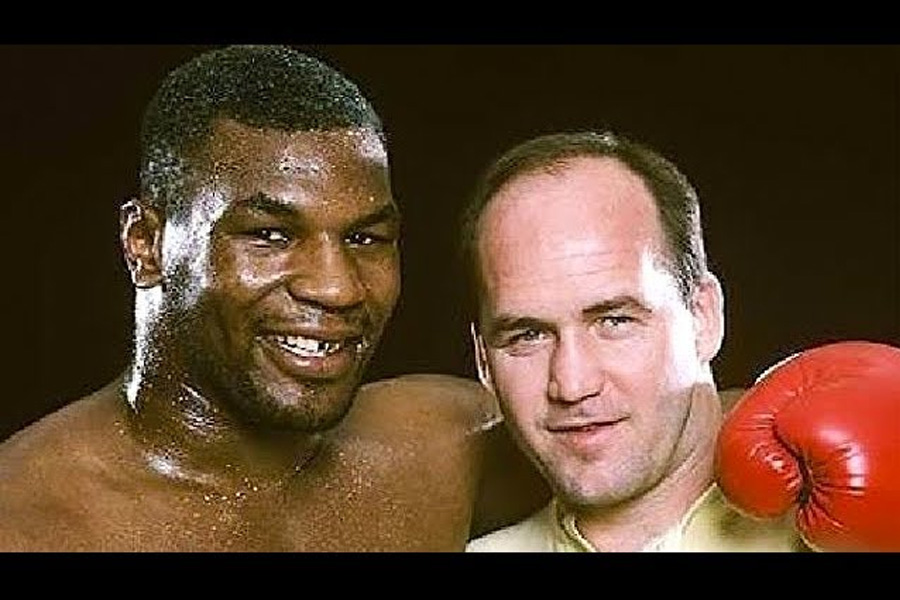
Rooney began working with teenage Mike Tyson in late 1982. Tyson was still raw, but already terrifyingly gifted. After Teddy Atlas departed and Cus D’Amato died in 1985, Rooney stepped into the central training role.
Those years from 1985 to 1988 remain the heart of his public legacy.
Under Rooney’s guidance, Tyson became a wrecking ball with precision. He was not just knocking men out. He was compressing space, slipping jabs by inches, and detonating hooks and uppercuts from impossible angles. The peek a boo style looked like a storm cloud with legs.
The numbers from that run are staggering:
| Period | Milestone |
|---|---|
| Late 1982 | Rooney begins working with Tyson |
| 1985 | Cus D’Amato dies, Rooney becomes lead trainer |
| 1986 | Tyson wins heavyweight title |
| 1987 | Tyson becomes undisputed heavyweight champion |
| 1988 | Tyson defeats Michael Spinks, remains undefeated |
| Record under Rooney | 35 and 0, with 31 knockouts |
I think Rooney’s greatest contribution was not just technical. It was organizational. He gave Tyson structure. He kept the machine calibrated. Technique, training rhythm, discipline, and confidence all moved together.
When Tyson was at his sharpest, Rooney was in the corner. That is not a coincidence.
The Split That Changed Boxing History
After Tyson destroyed Michael Spinks in 1988, the collaboration terminated. Boxing’s great what-ifs included the split. Tyson was shattered by outside forces like Don King’s rise and Robin Givens’ difficulties. Plaintiffs sued Rooney after his firing.
From that point on, the Tyson story changed. His style became less disciplined, his movement less refined, and his ring habits less consistent. The blade was still sharp, but no longer honed with the same care.
For Rooney, the split was deeply personal and professionally costly. He had helped build boxing’s most explosive young champion, only to be pushed out as the empire reached its peak. It was like watching an architect removed from his own cathedral before the bells stopped ringing.
Life and Work After Tyson
Rooney did not disappear after Tyson. He continued training fighters and remained a respected figure in boxing circles. One of the most notable names he worked with was Vinny Paz, who won a world title under Rooney’s guidance.
That achievement often gets overshadowed by Tyson, but it matters. It showed Rooney was not simply a one fighter specialist. He could adapt, motivate, and guide other talents as well.
Over the years, he also made appearances in boxing media and lighter entertainment segments, showing a personality that could be dry, sharp, and unexpectedly funny. Yet his center of gravity always remained the gym.
As of 2025 and 2026, Rooney is still associated with Catskill and continues to work with younger boxers. That continuity is part of what makes him special. Many figures in boxing fade into nostalgia. Rooney still puts his hands on the craft.
Kevin Rooney’s Family and Personal Life
Public details about Rooney’s private life are limited. He has kept much of it out of the spotlight. What is known is that family has been both a source of pain and a source of repair in his life.
He came from a difficult household, with both parents struggling with alcoholism. That dysfunction shaped his early years and likely sharpened his appreciation for discipline and order. In many ways, the gym became the family system that worked when home did not.
There is little widely shared information about a spouse, additional children, or his siblings. That privacy has remained consistent over the decades.
Kevin Rooney Jr., Also Known as KC
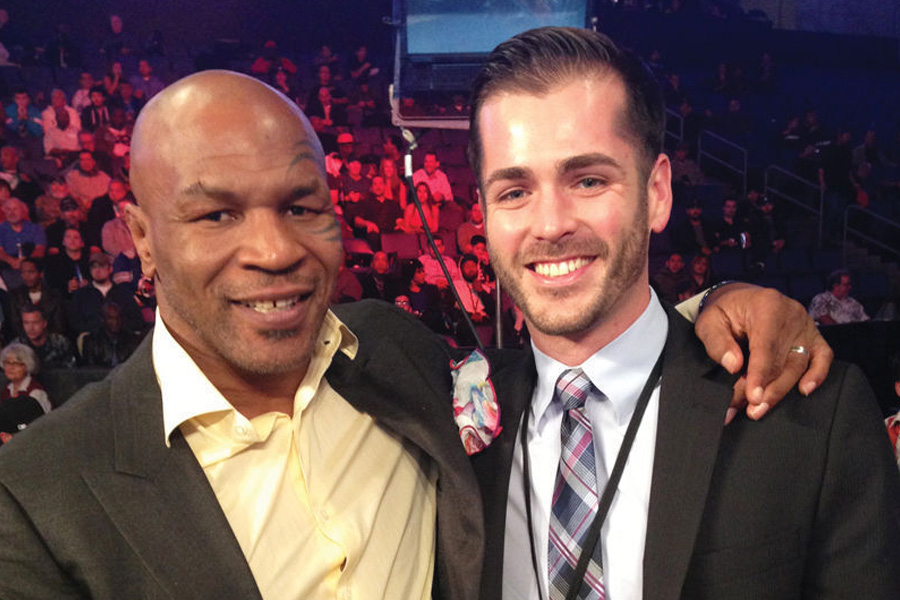
The clearest public family connection is his son, Kevin Rooney Jr., sometimes called KC. He followed his father into boxing, both as a professional boxer and as a trainer. Around 2011, Kevin Jr. turned professional, carrying the family name into the sport’s next chapter.
Their relationship is important because it reflects something more than career overlap. Boxing became a bridge between father and son. Kevin Sr. trained and managed Kevin Jr., and through that work they maintained a close partnership.
A brief profile helps sketch the picture:
| Family Member | Relationship | Notable Details |
|---|---|---|
| Kevin Rooney Jr. | Son | Professional boxer, trainer, worked closely with his father |
| Also known as | KC | Connected to Catskill boxing scene |
| Education | Fordham University GSB, 2007 | Balanced academics with boxing roots |
I find that detail revealing. Rooney’s story is often framed through conflict, hardship, and the Tyson split. But the bond with his son adds another layer. It shows boxing as inheritance, not just occupation. Not only a battleground, but also a family language.
Rooney’s Lasting Legacy in Boxing
Rooney’s place in boxing history rests on three pillars.
First, he was a real fighter with legitimate credentials. Second, he was one of the central builders of Mike Tyson’s early greatness. Third, he preserved and taught Cus D’Amato’s methods with unusual fidelity.
That final point may be his most lasting gift. Boxing loses knowledge all the time. Styles disappear. Methods get diluted. The old masters become names without texture. Rooney kept the peek a boo tradition alive in practical form, not as museum talk but as living craft.
He also remains one of boxing’s more straightforward personalities. No glitter. No salesman’s fog. Just hard truths, repetitions, and the kind of loyalty that can be expensive.
Career Timeline at a Glance
| Year | Event |
|---|---|
| 1956 | Born on May 4 in Staten Island, New York |
| 1975 | Wins New York Golden Gloves |
| Late 1970s | Builds professional boxing career |
| Late 1982 | Begins training Mike Tyson |
| 1985 | Becomes Tyson’s head trainer after Cus D’Amato’s death |
| 1986 | Tyson wins heavyweight title |
| 1987 | Tyson becomes undisputed champion |
| 1988 | Tyson and Rooney split after Spinks fight |
| 1990s | Rooney trains Vinny Paz and other fighters |
| 2011 | Kevin Rooney Jr. turns professional |
| 2025 to 2026 | Rooney remains active in Catskill boxing circles |
FAQ
How old is Kevin Rooney?
What is Kevin Rooney’s age?
Kevin Rooney was born on May 4, 1956. In 2025, he is 69 years old, and in 2026, he turns 70.
What is Kevin Rooney best known for?
Why is Kevin Rooney linked so closely to Mike Tyson?
He is best known for serving as Mike Tyson’s trainer during Tyson’s rise to the heavyweight championship. Rooney helped guide Tyson to a 35 and 0 record, including 31 knockouts, while applying the Cus D’Amato peek a boo style with rare precision.
Did Kevin Rooney box professionally?
Was Kevin Rooney a fighter before becoming a trainer?
Yes. Rooney was a strong amateur and won the 1975 New York Golden Gloves. He later turned pro and finished with a respectable record of around 21 wins and 4 losses, facing quality opponents.
Who trained Kevin Rooney?
What was Rooney’s connection to Cus D’Amato?
Rooney trained under Cus D’Amato in Catskill, New York. D’Amato shaped his understanding of boxing technique, psychology, and the peek a boo system that later became central to Tyson’s early success.
Why did Mike Tyson fire Kevin Rooney?
What caused the Rooney and Tyson split in 1988?
The split came after Tyson’s 1988 win over Michael Spinks. The breakup was influenced by changes in Tyson’s inner circle, including Don King’s growing role and tensions connected to Robin Givens. Rooney was fired, and legal action followed.
Did Kevin Rooney train anyone notable besides Tyson?
Which other fighters worked with Rooney?
Yes. One of the most notable was Vinny Paz, who won a world title while working with Rooney. He also trained other fighters and remained active with younger prospects over the years.
Who is Kevin Rooney Jr.?
Is Kevin Rooney’s son involved in boxing?
Yes. Kevin Rooney Jr., also known as KC, became a professional boxer around 2011 and has also worked as a trainer. He has been trained and managed by his father, and the two share a close relationship in the sport.
Is Kevin Rooney still active in boxing?
What is Kevin Rooney doing now?
Yes. As of 2025 and 2026, Rooney remains active in boxing, especially around Catskill. He continues working with young fighters and is often mentioned in conversations about Tyson’s early career and the preservation of Cus D’Amato’s legacy.
What is Kevin Rooney’s net worth?
Is Kevin Rooney wealthy?
His net worth is not publicly detailed and is generally considered modest compared with elite champions or major promoters. His income has come from training fees, gym work, and occasional appearances rather than massive commercial ventures.